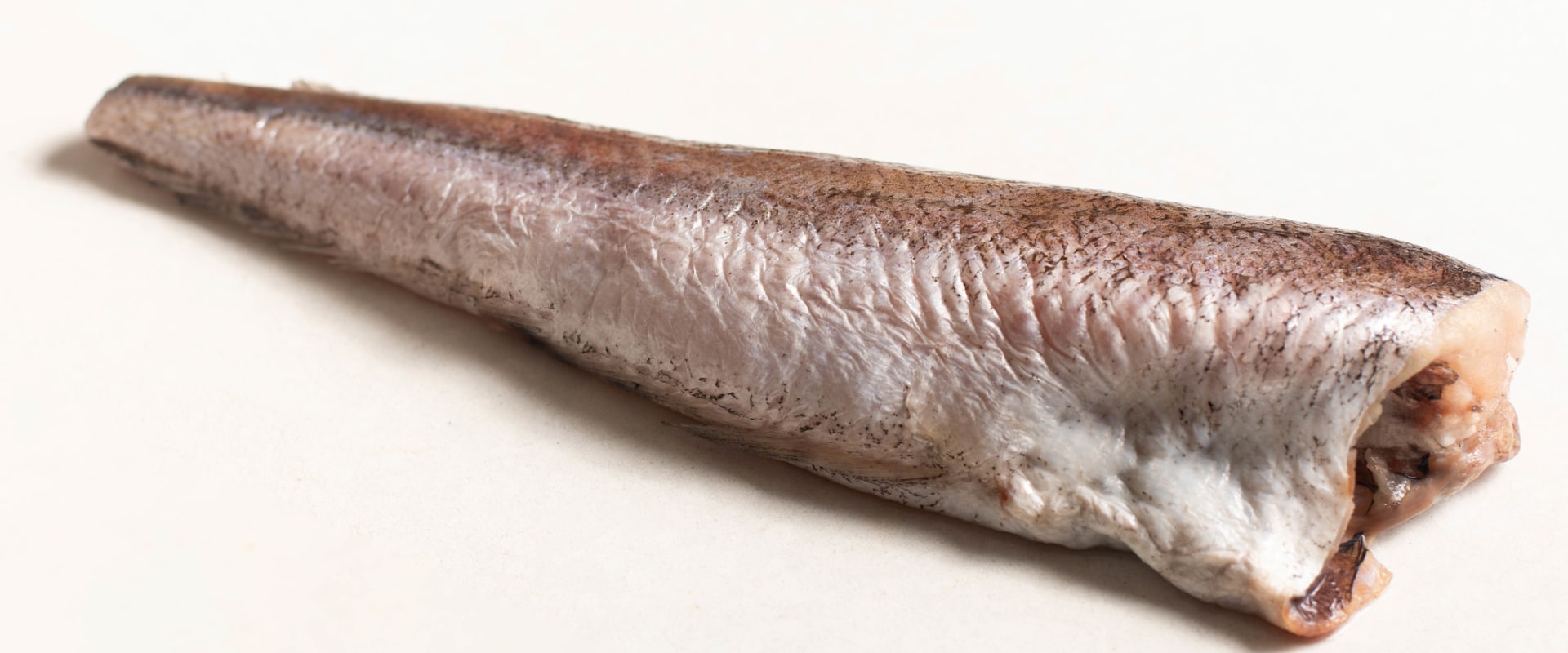
This article focuses specifically on what hake fish tastes like and why, using a chef-informed perspective rather than generic seafood claims. You’ll learn how hake’s natural flavor compares to cod and pollock, what actually causes “fishy” taste, and what most people experience on their first bite when the fish is fresh and properly handled. By the end, you’ll have a clear, realistic expectation of hake’s flavor—and why it’s trusted for clean, mild seafood dishes.
TL;DR Quick Answers
What is hake fish?
Hake is a mild, clean-tasting whitefish commonly used in professional kitchens for its reliability and versatility. In the U.S., it usually refers to Pacific hake (Pacific whiting), a long, slender fish with soft flesh that absorbs flavor well. Chefs favor hake because it delivers a neutral, non-fishy taste when fresh, making it ideal for simple preparations and broad appeal.
Top Takeaways
Not fishy when fresh.
Clean. Mild. Lightly sweet.Handling matters most.
Fishy taste comes from poor storage.Trusted by chefs.
Used for subtle, approachable seafood.Technique shows fast.
Simple cooking works best.Perception vs. reality.
Professionals value hake’s reliability.
Does Hake Fish Taste Fishy?
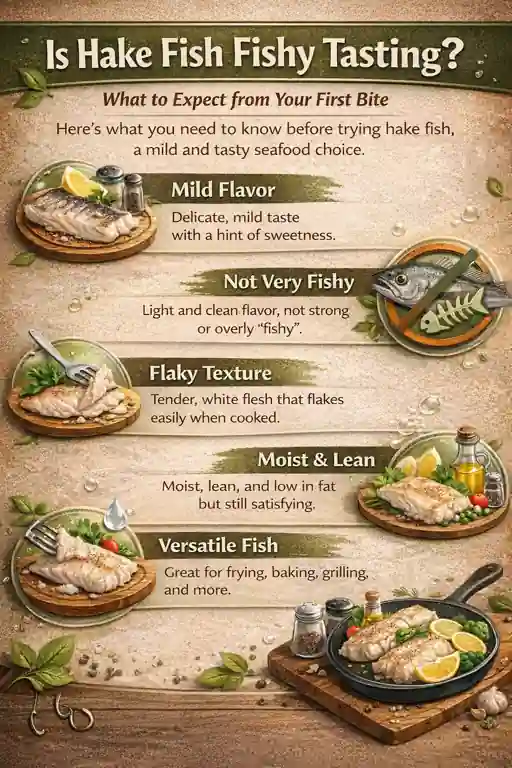
Hake is considered one of the mildest-tasting whitefish. When fresh, it has a clean, neutral flavor with no strong fishiness. In professional kitchens, it’s often chosen specifically for diners who prefer subtle seafood rather than bold, ocean-forward taste.
What Hake Actually Tastes Like
Hake has a light, slightly sweet flavor and delicate flesh. Its taste is commonly compared to cod or pollock, but softer and less dense. The flavor stays neutral, making it easy to pair with sauces, herbs, and seasonings without overpowering the dish.
Why Some Fish Taste “Fishy” (and Hake Usually Doesn’t)
A fishy taste usually comes from age, improper storage, or poor handling, not the species itself. Because Pacific hake is harvested in large, well-managed fisheries and often processed quickly, it typically avoids the conditions that cause strong odors or flavors.
How Preparation Affects Your First Bite
Hake performs best with simple cooking methods like pan-searing, baking, or light battering. Overcooking can dry it out, while fresh, gently cooked hake stays moist and mild. This is why chefs rely on it for approachable seafood dishes.
What to Expect as a First-Time Eater
First-time tasters are often surprised by how clean and non-fishy hake is. If you enjoy mild whitefish and want something versatile and easy to eat, hake is likely to meet—if not exceed—expectations, making it a practical choice when evaluating dishes within a food recipe costing template focused on consistent flavor and broad appeal.
“When people worry that hake will taste fishy, it’s usually because they’ve never had it handled properly. In professional kitchens, fresh hake is one of the cleanest-tasting whitefish we work with—mild, lightly sweet, and easy to build flavor around without fighting the fish.”
Essential Resources
These are the trusted guides chefs and seafood buyers turn to when deciding how to evaluate, source, and work with hake — whether you’re testing it for menu placement or deepening your species knowledge.
NOAA Fisheries – Pacific Whiting (Pacific Hake) Species Profile
Chef-level fishery baseline
Federal science on Pacific hake (often sold as whiting) that clarifies stock health, seasonal patterns, and population data so you know what’s behind your seafood order.
https://www.fisheries.noaa.gov/species/pacific-whiting
NOAA Fisheries – Pacific Whiting Resources Hub
Quick access to research and management docs
A curated library of reports, quota info, and regulatory materials that help you prep sourcing specs, sustainability talks, and vendor comparisons.
https://www.fisheries.noaa.gov/species/pacific-whiting/resources
Fisheries and Oceans Canada – Pacific Hake / Pacific Whiting Profile
Cross-border management context
Shows how the U.S. and Canada collaborate on hake assessments — vital if you’re dealing with North American supply chains or seasonal availability.
https://www.dfo-mpo.gc.ca/species-especes/profiles-profils/pacifichake-whiting-merlupacifique-nord-eng.html
California Deptartment of Fish and Wildlife – Pacific Hake Overview
West Coast ecological and fishery snapshot
State-level data and catches that explain why hake keeps coming through the dock in volume and how local harvests shape supply windows.
https://marinespecies.wildlife.ca.gov/pacific-hake/
Marine Life Identification – Pacific Hake Guide
Visual species ID + traits
Quick reference for recognizing hake’s look and anatomy at the market or receiving dock — especially helpful if you compare it to cod, pollock, or other whitefish.
https://www.marinelifeid.com/identification/pacific-hake-merluccius-productus/
Pacific Whiting Association – Commercial Hake Fishery Overview
Industry-side fishery structure
Breaks down how the Pacific whiting/hake fishery is organized, from harvest sectors to processing — valuable if you need to explain supply logistics to buyers.
https://pacificwhiting.org/the-pacific-whiting-fishery
FishBase – Global Hake Species Database
Scientific comparison across hake species
A global species resource that’s ideal for side-by-side biological and ecological comparisons, especially if you’re dealing with imported hake varieties.
http://www.fishbase.us
Together, these essential resources give chefs and seafood buyers a clear, professional framework for evaluating Pacific hake—helping them accurately identify it, source it responsibly, and avoid confusion with other species, including skate fish, that often complicate seafood purchasing decisions.
Supporting Statistics
1) 295,520 metric tons — 2025 U.S. Total Allowable Catch (TAC)
Federally set by NOAA Fisheries
Signals strong stock health and long-term planning
Explains why hake is consistently available to buyers
Source (.gov): https://www.fisheries.noaa.gov/action/2025-pacific-whiting-us-total-allowable-catch-2025-tribal-allocation-2025-incidental-set2) Over 50% of the West Coast groundfish harvest
Largest managed groundfish resource (WA/OR/CA)
Moves massive volume through processors and distributors
Often present behind the scenes rather than on menus
Source (.gov): https://marinespecies.wildlife.ca.gov/pacific-hake/3) 170+ million pounds landed annually in Oregon
Roughly $15 million in direct value to fishermen
Reflects steady supply and competitive pricing
Source (.org): https://www.oregontrawl.org/fisheries/pacific-whiting4) 170+ million pounds landed again in 2022 (Oregon)
Confirms multi-year consistency
Reinforces hake’s reliability in real buying cycles
Source (.org): https://www.qualityinfo.org/-/let-them-eat-hake-oregon-s-seafood-processing-industry
Key takeaway:
Pacific hake is abundant, tightly regulated, and consistently landed—the same traits seafood professionals rely on for freshness, mild flavor, and dependable sourcing.
Final Thought & Opinion
Hake’s reputation for being “fishy” doesn’t match real-world kitchen experience.
From working with chefs and seafood buyers, a few points consistently stand out:
Fresh hake tastes clean, not fishy.
Often milder than people expect.Handling matters more than the species.
Freshness and storage shape the flavor far more than the name on the label.Hake rewards good technique.
Its soft flesh reflects quality immediately—good or bad.
Our perspective
Hake isn’t a “beginner fish.”
It’s a reliable, honest whitefish that professionals trust.
Simple cooking highlights its best qualities.
Bottom line:
When sourced well and cooked properly, hake delivers a clean, balanced first bite—without the fishy taste many people expect.
FAQ on Hake Fish
Q: Is hake fish fishy?
A: When fresh, hake is not fishy. It has a clean, mild flavor with no strong odor or lingering aftertaste.
Q: What does hake taste like?
A: Hake tastes light and slightly sweet. Its neutral flavor makes it easy to season and pair with sauces without overpowering the dish.
Q: Why does hake sometimes taste fishy?
A: A fishy taste usually comes from poor storage, age, or improper handling rather than the fish itself.
Q: Is hake a good choice for people new to seafood?
A: Yes. In professional kitchens, hake is often chosen for diners who prefer subtle, approachable seafood flavors.
Q: How should hake be cooked for the best flavor?
A: Simple cooking methods and gentle heat help preserve hake’s mild taste and delicate texture.